Monday, September 17, 2007

Sydney -day 4

Sept. 12. Sydney, Day 4

We leave this afternoon on the Indian Pacific train. But first: I wake up early. The Harbour Bridge beckons. I decide to walk across it and back and am rewarded with this view of the Opera House from the Bridge at 530am.

From one end of the walkway to the other is about 20 mins.

I’m fascinated by the Bridge. That’s the Sydney icon for me. As Bryson notes, it’s always popping up in your line of sight – above a leafy residential street, over the top of low buildings, end of busy avenue, as a ferry rounds a point, … It’s known affectionately as the “coat hanger,” and you can see why. Its magnitude - the massiveness of the pylons and girders - relative to a fairly short harbour-crossing makes it stand out. It’s not one of those wispy modern bridges you see – the ones that impress you with their apparent lightness and hide their real strength.

This bridge carries 10 lanes of traffic, I think, plus a light-rail line, and a pedestrian lane on one side, bike lane on other side.


This is our last morning in the Lord Nelson. We do both breakfast and lunch there – finally have a meat pie. Quite meaty and well-spiced. In between we manage to use our phone card successfully – repeated failures the day before, at a cost of AU50c each! The card, though, is phenomenal once you get connected – 300 mins. for US$8. Good to talk to the folks at home. We also check e-mail and I blog-post our Sydney notes and pictures for your edification and pleasure. [Note added later. A week later we - Dick, actually - get the idea to call the card's customer service number. Turns out we've been interpreting things wrong. The card has access numbers listed by cities. That means use them only in those cities. We've been using the access number of the nearest city when we've been out in the bush. Wrong. That requires more money in the machine for a long distance call. We've been putting in 50c, as in Sydney, so, boom, when that's spent the line is disconnected. There's another access number for calls outside the listed cities. So, as of today, 9/18, we're using the phone card correctly. I think we're paying more for it, though, when we have to use the national number. But, it's worth it to hear the voices of all of you to whom we have been fortunate enough to speak.]


Across the way from the Lord Nelson is a historical observatory, now a museum, and we spend an hour there. Lots of telescopes and associated gear plus a very interesting video is playing on the voyage of James Cook that led to the discovery of Australia. His reason for being in the south Pacific was to observe the “transit of Venus.” That’s when Venus passes in front of the sun, from the right perspective on earth. This happens twice in an eight-year span about once a century. I don’t have even a glimmer of the mathematics/geometry involved, but by measuring this transit it’s possible to get an accurate estimate of the distance from the sun to the earth and from that be able to measure distances among the other planets more accurately than would otherwise be possible.

Now, I’m leading up to some interesting statistics. There’s a famous paper in which successive estimates, by different laboratories, of the earth-sun distance are compared. Each lab, as should be the case with scientific work, included “error bars” to express how uncertain their measurements were. It turned out, though, that each successive estimate did not fall in the error bars of the preceding lab’s estimate. So, the error bars weren’t really capturing how uncertain an estimate was. Important sources of uncertainty had been left out. The author’s point was that better methods were needed to evaluate uncertainty.

OK, sorry for the diversion. Back to Cook’s voyage. After catching the Venus transit, he sailed on SW and found New Zealand. Sailed its whole circumference and mapped it, I believe. Milford Sound is a fiord on the west side of the south island – very scenic and much visited. When Susie and I were there in 2003 we were told that the entrance to the Sound is difficult to see from sea and so Cook missed it. In the video, Cook and company saw the fiord and the botanist on board wanted to land and explore. Cook said, No, too dangerous. Fiords are too deep to anchor in so they would be hard-pressed to keep from being dashed on the rocks. Of course, he won the argument.

After doing NZ, the next issue was how to go home to England: east, around S. America, or west, around Africa. If west, they would look for what was then called “New Holland,” parts of which had been discovered by earlier European explorers. The decision was West. Lo and behold, land ho! That’s where the video ended. Cook named their landing point, Botany Bay, for his botanist, then sailed up and mapped the east coast and claimed the land for England. He missed the Sydney Harbour entrance. When the first load of prisoner-settlers came, they didn’t like Botany Bay and found their way north a bit to what was to become Sydney Harbour.

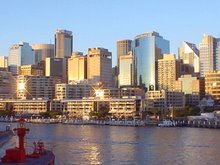
Here's a last morning's view of Sydney. Really a great city.


Cheers,

Rob


Blue Mountains

Sept. 11. Blue Mountains

Tuesday, 9/11, was devoted to a tour of the Blue Mountains. The Blue Mtns.aren’t high – about 3300 ft., but they’re rugged and densely forested in some areas. They get their name from the bluish haze produced by gas emitted by the eucalyptus trees.


It took about 25 years before the settlers penetrated and crossed the mountains due to terrain and Aborigine resistance. They found the sort of land that was urgently needed for raising crops and livestock. Prior to that, con men in Sydney sold maps to the geographically-challenged convict/settlers purporting to show a route through the mountains emerging in China and freedom! I guess not enough of them got back to Sydney to warn others of this scam.


We made several Blue Mtn stops: the Blue Mountains National Park, where we saw kangaroos and cockatoos in the wild, sort of. They're accustomed to gawkers. Also saw Wentworth Falls and a rock formation called the Three Sisters.


Nice mountain vistas all along the way. That's my passport pouch cleverly disguised as a paunch under my poncho.


Just past the Three Sisters we stopped at a site where a cog railroad used by coal miners had been converted into a tourist railroad – the steepest incline RR in the world, the sign said: a vertical drop of 250 meters over a distance of 450 meters. It’s like being on a roller coaster with brakes. Weather turned cold and windy, with light rain, so we opted for mechanical conveyance up and down the cliff front as opposed to an hour and a half bushwalk.

Cheers for now,


Rob


Tuesday, September 11, 2007

Sydney

Sept. 9

Arrived Sydney 730 am. Shuttle took us to the Lord Nelson Brewery and Hotel – the oldest hotel in Sydney, located in the Rocks area of the city. Pub door was open, we went in. Nobody around. Shades of the Newmarket in Adelaide 16 years ago (see previous posting below). We hear people on the stairs – the stairway behind the pub leading up to the rooms. It’s a couple of patrons of the hotel. They tell us it is a functioning hotel and where to find receptionist. We find her. She’s very helpful. We’re too early to get into our room, but we can leave our bags in office and she directs us to the Rocks market, a popular weekend gathering place where we have some brunch, it now being several hours since our Qantas breakfast. The whole hotel experience here is very nice - it was a good choice.


On our way to the market we passed the Holy Trinity Anglican Church, also known as the Garrison church because, historically, soldiers were garrisoned in this area. We had decided to go to church here, so that’s where we returned after brunch.


At church a small congregation in lovely, old church, very formal, mostly older people, except one young man, the student minister, with family, including noisy child. Had a communion service. There was tea after the service and we had a nice conversation with pastor’s wife and student minister. Maybe more on this visit later.
One connection (?): On the flight over I couldn't sleep and spent most of the time reading Deliverance, by James Dickey - the book behind the movie most everybody has seen. Well, the preacher's sermon was from Psalms 3, concluding with this verse: Ps 3:8: “From the Lord comes deliverance." Question: Is Dickey using “deliverance” in any sort of Biblical/allegorical sense? I doubt it. His canoeists got their deliverance by violence and dishonesty. Their actions were more in line with: Psalms 3:7 “Deliver me. Strike all my enemies on the jaw.” Anyhow, that's more than enough amateur theology.

After church we caught the City Sightseeing bus for a tour of the downtown area. Well, much of it; I noticed they skipped the Opera House stop. This was no doubt due to the meeting of APEC (the Asian Pacific Economic Co-operation – one newspaper columnist I saw noted this doesn’t make grammatical sense and is not a good acronym – too similar to OPEC, a similarity that tripped up W). APEC ended today with a wrap-up at the Opera House.
There were lots of complaints in the newspaper columns and letters about security provisions. These economic summits tend to spark passionate, sometimes violent protests, so Sydney had prepared diligently – lots of police and barricades. There were signs up on many streets designating them “clearways,” meaning no parking and don’t get in the way of official vehicles should they need the road. Seemed inconsistent with Sydney's relaxed view of itself, but you can understand the official concerns, too.

Here's a representative city shot from the top of the bus

It's a great and beautiful and friendly city. Clean and attractive.

After the bus tour we went back to the hotel, unpacked, and removed 24 hours of grime, plaque, and whiskers from our bodies, teeth, and faces. Back to the street – our on-and-off tour book pass is good for 24 hours. We made our way to Darling Harbor, a popular gathering place, and found something to eat – seafood. Finished the day with an after-dark water-taxi tour: out from Darling Harbour, under the Harbour Bridge, around the Opera House, then return.


Monday, Sept. 10, was more Sydney touring: the Opera House, the Sydney Tower, and a ferry to Manly, on the north side of the entrance to Sydney Harbour. Here's an Opera House view and the Manly beach:


The Harbour Bridge fascinates me. Bryson writes, in In a Sunburned Country, about how the bridge keeps popping into view unexpectedly -- down a tree-lined side street, over the tops of low buildings, at the end of a busy avenue, ... I had same impression. Monday night we walked halfway across it, then Wednesday morning I walked all the way across and back. Got a 530am picture of the Opera House that looks pretty special. You'll have to wait, though, because I didn't get it transferred to my flash drive before finding this internet cafe. Stay tuned.


Cheers,

Rob

Monday, September 3, 2007

History

Some data: Australia is the sixth largest country and largest island in the world. It has 20M (million) people and an area of 3M square miles. By way of contrast, the USA figures are 300M people in 3.5M square miles. Australia is five times the size of Alaska, ten times Texas.

The Indian Pacific train trip from Sydney to Perth (coast to coast, E/W) is 2700 miles long; driving distance from Washington DC to LA is about the same.

Geological Origin: Australia is estimated to have separated from the Asia/Africa land mass on the order of 100M years ago. As a result, Bryson says, 80% of all plant and animal life in Australia exists only in Australia.

First humans, the Aborigines, arrived, presumably by boat, by various estimates from 40,000 to 70,000 years ago (source: Wikipedia). This would have required a sea crossing of at least 60 miles, though something I read said that a glacial period could have shortened the distance. It would also have required enough colonists to propagate the population. Much is unknown. Bryson was amazed that he found little interest (his book was published in 2000) in understanding the origins of the Aboriginal people.

European Contact and Settlement (source: Bryson): There is evidence of European presence in Australia as early as 1525, but the real story starts with James Cook's discovery and flag-planting in 1770. He sailed along the east coast and found it to have "a very agreeable and promising aspect." Little did he know what lurked inland. Also, his voyage was during the wet season. This picture of Captain Cook from Wikipedia.


A few years later, England was casting about for a new place to send its undesirable citizens (the United States having been lost). How about Australia? Accordingly, eleven ships with a colonization group of prisoners and guards (1500 people total) left England in 1787. The trip took eight months and they arrived in mid-summer -- not the conditions that Cook had seen. Seeking a better location, the fleet sailed a ways north and settled in what is now Sydney Harbour. They were ill-prepared, but they survived and eventually prospered.

Further settlement and expansion took place over the next century and six colonies were formed. In 1901, these colonies became a federation and thus created the Commonwealth of Australia. Roughly, Australia has been a country half as long as has the United States.

OK, got the boring stuff out of the way.


Bryson tells this story with more humor. One incident: a French ship arrived at SE Australia quite soon after Cook did. A few days earlier, Bryson says, would have "saved the country two hundred years of English cooking."

G'day

Rob

Book Notes

I did a variety of reading to get ready for Australia. Friend, Ann Look, loaned me her book, In a Sunburned Country, by Bill Bryson. Bryson is a humorist and travel writer – I had previously read his book on hiking the Appalachian Trail, A Walk in the Woods, but didn’t know he had “done” Australia.

A recurring theme in Bryson’s Australia book is the many unpleasant ways you can die there. First, there’s the whole interior of the country – extreme heat, lack of water. Bryson says, “Australia is the driest, flattest, hottest, most desiccated, infertile, and climatically aggressive of all the inhabited continents. Only Antarctica is more hostile to life.”

Bryson also worries about Australian animal life: the world's top ten poisonous snakes are Australian. Additonally: crocodiles, poisonous spiders, and various venomous sea creatures. We'll be careful.

Bryson rode the Indian Pacific train. He loved it. "It was like being given a preview of what it will be like to be in your eighties. All those things eighty-year-olds appear to enjoy -- staring vacantly out windows, dozing in a chair, boring the pants off anyone foolish enough to sit beside them -- took on a special treasured meaning for me. This was the life!" Can't wait -- for the train, not being eighty.

Before my 1991 trip my sister, Verla, sent me a National Geographic with an article about the “camel lady.” Robyn Davidson left a comfortable life in Brisbane in the 1970s to spend two years in Alice Springs learning about camel care & handling. Then she took a string of four camels 1700 miles across the desert to the west coast. Her book, Tracks, tells her story. I re-read that book and was struck by the emotional aspects of her experience. She writes a lot about what it’s like to abandon a modern lifestyle for a primitive, Aborigine-like type of existence. Physically, it was very tough, too, as you might imagine, especially when marauding bands of wild camels threatened her camels.

For more background reading I went to the Albuquerque library and Amazon listings for "Australian fiction." Checked a few out of the library. The Secret River, by Kate Grenville was a good piece of historical fiction, an award-winning book about a British convict sentenced to death, for theft, whose term was commuted to exile in Australia in the early 1800s. His wife was sent with him, in essence, to be his parole officer. They end up settling along a little-known river and the book deals mostly with raising a family there and dealing with elements, other settlers, and the Aborigines in the area.

Bryson notes that Australians he met didn't want to talk about the Aborigine "problem." The situation twenty years earlier is addressed in Davidson's book. I also read the Rabbit-Proof Fence and Susie and I watched the movie which is about three half-breed girls taken from their families and sent to a government boarding school. They escape and walk 1200 miles to get home.
I've been reading Aussie newspapers and there are frequent stories about current Aborigine issues and government programs. As we know, it's not easy finding the right way to merge immigrant and indigenous peoples and cultures.

Incidentally, a friend advised us that Australia still requires a criminal record in order to get into the country, so when Immigration asks, say yes.

Last spring, when we were in Fredericksburg, TX, I picked up The Old Patagonian Express, by Paul Theroux. He left his home in Boston, then by catching successive trains, where possible, traveled to southern Argentina -- Patagonia. He's written other books based on his train travel. These are not guide books. He writes about people he meets, what he eats and drinks, troubles encountered trying to get from one point to another, books he reads while traveling, etc. He's a bit of a curmudgeon, but in an entertaining way.


Theroux also writes about travel-writing. When he started thinking about writing about his travels, he had found that most travel writing was a bore -- just about sight-seeing. He had found that "half of travel was delay or nuisance." So, he wrote about his travel experiences. One quote: "When something human is recorded, good travel writing happens." In my abbreviated, bloggy way, I'll try to remember that.

People have remarked about our (Susie's and my) willingness to write, expose ourselves, about troubles we have encountered in our motor home travels. Well, those misadventures were some of the most interesting things that happened so, given they weren't tragedies, it seemed appropriate to tell it like it was. We weren't consciously following Theroux, but still consistent with his approach, I like to think.

At any rate, I'm taking a couple of books on this trips that Theroux took on his. If I get around to reading them, I'll let you know about it.

Four days until departure!

Cheers,

Rob

Wednesday, August 8, 2007

Notes from 1991: Newmarket Hotel

Notes from 1991 trip – Newmarket Hotel

Mom and I went to Australia in 1991 to see my brother, Lael, who was early into what turned into about 10 years of working there. He was located in Melbourne, so that’s where we started. While Lael worked, Mom, Lael’s late wife, Sheila, and I flew to Alice Springs, with a side trip to Ayers Rock. After Alice, Sheila flew back to Melbourne and Mom and I flew to Adelaide – a city Mom had read about and wanted to see.

Way back in 1991 I blogged in a scrapbook, cutely titled “Bob and Bonnie’s Excellent Journey to Australia.” The following account is taken from that record:

In a guidebook, under the heading, Budget-Priced Accommodations, I learned about the Newmarket Hotel. It was called “absolutely charming, … one of our favorite low-price bargains in the entire country,” and described as a “hotel with genuine creaky character ... – it dates back about 130 years (at the time). The centerpiece is its wonderful, freestanding cedar spiral staircase swirling from the lobby to the upper floor.” All that and budget-priced, too! Couldn’t resist booking us there.

Well, we landed in late afternoon and boarded an airport bus taking passengers to various hotels. I got a little nervous when the driver didn’t know where the Newmarket was – I gave him the address. After dropping passengers off at various well-lit hotels, we proceeded down darkening streets and through shabbier surroundings. As we pulled up to our historic, budget-priced hotel, Mom said, “I think one night will be enough.”

We entered a dark, empty lobby. I roamed around, heard noise from the kitchen and then a cook came out to greet us. He led us up one flight of the circular staircase to the manager’s apartment. Happily, the mgr. was a young pleasant type, not Boris Karloff or Anthony Perkins, or we would have been out of there. He assured us that this was an operating hotel, checked us in, and invited us to dinner in the restaurant.

We climbed the circular staircase to our room, which was a little spooky – high ceiling; peeling, water-stained green velvet wallpaper, tacky furnishings. But, hey, the price was right. And, just look at that spiral staircase!


The restaurant was another eerie experience. Nobody was there, and this was the dinner hour, and nobody came in while we were there. Nevertheless, they had an elaborate salad bar laid out for dozens of people. We had a great meal and a nice visit with the manager and the only waitress. Manager said the plan was soon to convert the rooms to offices – we conjectured that Mom and I might be the last people to stay there, if you know what I mean.

I went along with Mom and decided that we would leave the next morning for Melbourne – without seeing any (more) of the city she wanted to see. I’m sure we slept fitfully. (In hindsight, the next morning we should have hied ourselves to the nearest Holiday Inn.) We were taking a bus/train combo trip to Melbourne – see some of the country that way -- and were able to move our departure up one day.

The manager had never heard of the bus/train thing, but arranged to have a cab pick us up at 630 am and take us to the bus station by 700 am. When I talked to the manager I didn't have the bus station address -- figuring that there must be only one station and that would be where we go. Overnight, though, I got an address for the station. The cab picks us up – it’s still dark – and I give the driver the address of our bus departure point. He does a doubletake, turns down an alley, and there we are at our bus pick up point – a sidewalk one short block from the hotel! By now you can see that my haphazard, ill-informed trip planning has been a long-time in developing. A few more passengers gathered, I walked back to get a picture of the Newmarket, the bus came, and we journeyed back to Melbourne.


I've thought occasionally of writing this story up for a travel magazine, but never did. Too late now, but thanks to the internet, it can now be told.

Hope to check out the Newmarket when the Indian Pacific stops in Adelaide. Will let you know what I find.

Cheers,

Rob

Monday, August 6, 2007

2. Plans - Lodging and Tours

Sydney.

Many of you know I’m something of a sucker for historic hotels, sometimes disguised as run-down. Elsewhere I’ll recap the 1991 visit Mom and I made to the historic and spooky Newmarket Hotel in Adelaide, Australia. I hope to check it out when the Indian Pacific makes its Adelaide stop. In New Zealand in 2003 Susie and I stayed in the historic Brian Boru Hotel in Thames. Susie still tells people about that experience in colorful terms. (You have to know that “hotel” in the southern hemisphere British colonies often means “pub,” at least for the main order of business.)

Nevertheless, I searched Sydney lodging websites and Frommer’s for something Sydney-unique, rather than a standard chain. Found the Lord Nelson Brewery Hotel. It is Sydney’s “oldest continually licensed hotel.” Dates back to 1831 and has now “been restored to its former grandeur,” the website says. It’s in the historic Rocks district, not far from the Circular Quay which is the hub for harbor ferries. Just hope it has a couple of beds for us, as we’ve been assured.

I think we’ll do conventional harbor and city tours in Sydney. Maybe the harbor bridge climb. There’s a tour bus through the city that you can board and exit as you desire all day. We’ll just let the agenda develop on the fly for a couple of days.


We have signed up for a Blue Mountain OzTrek that explores the mountains to the west of Sydney. Includes some bushwalking opportunities. Nice pictures on the website.

Indian Pacific Train

Some have asked if we’ll be on the train continuously for three days. Answer: No. There are whistle stop tours in Broken Hill (former silver mining center), Adelaide, Kilgoorlie (gold mining), and Perth.

Uluru

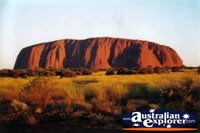
As mentioned in previous post, we’ll do a sunset tour soon after we get there. There are various possibilities for the next morning. In 1991 I did the Ayers Rock climb – got the pictures and poster. I’ve read recently, though, that the Aboriginal people to whom the area belongs prefer that people not climb on their holy site. Alternatives are hikes or drives around the rock and the nearby Olga Mountains – more large red outcroppings, taller but not as massive as Uluru. In 1991 I took an airplane flight over the area that was dramatic. Now, our other option is a helicopter flight over both Uluru and the Olgas. Dick’s a former pilot so that appealed to him. I debated a little, thinking I might prefer climbing or hiking, but then decided to take the chopper flight, too.

Non-holy Uluru memory: In 1991 our guide told us that the record for the fastest climb of Ayers Rock was held by a New Zealander who was told there was a sheep at the summit. Having spent four months in New Zealand, 4 million people, 50 million sheep, I have greater appreciation for that comment.

The tourist village a few miles from the Rock, has accommodations ranging from backpacker to luxury resort. Mom, Sheila, and I stayed in a campground cabin in ‘91, which was fine, so that’s what Dick and I are doing.

Cairns

Something I read made Cairns, the departure point for Great Barrier Reef tours, sound sort of tacky (there are a variety of travel websites that feature traveler reviews of wherever people go). Frommer’s identified some beach accommodations further up the coast, so we opted for the Ellis Beach Bungalows, about a half-hour away. Will mean we need to rent a car to get back and forth and spend more time driving, but it looks pretty attractive. Don’t know how much beach time we will have, but will try to make the most of it. We're staying there two nights; then a night in Cairns in order to be near train depot for early departure the following morning.

There are lots of Barrier Reef tours to choose from. Friends at church, Gib and Kay Richards, advised us to take the Great Barrier Reef Adventure and Green Island tour, so we are. Options include snorkeling and scuba diving on the reef plus some beach time on Green Island, near Cairns.

Now, here’s the biggest surprise, so far. In 1991, I knew that a HS classmate was living somewhere in Australia, but I thought (statistically), It’s a big country, not much chance ole Dan will be where I’m going, so I didn’t pursue it. After I got home, I found out he was in Melbourne, just where we’d been to see my brother. Drats!

This time I checked the faculty website at Monash University, where Dan had been. Not there now. So, I Googled Dan Irby and up popped Dan Irby’s Mangrove Adventures – on the Daintree River, about an hour and a half north of Cairns. He started this venture in 1993. A little e-mail back and forth and Dan’s going to devote a full day to showing just Dick and me his river and his house. Something makes me think his house may be an adventure, too -- the following picture may provide a hint.

Just now I noticed Dan’s website has a Frommer’s icon, so I looked in my Frommer’s and found a big, enthusiastic write-up for his river tour. It even mentions his Oklahoma origins! Thank you, Google.
Now, what about this Tilt Train? you may ask. Is tilting good? Well, that enables it to go fast. According to Wikipedia the Tilt Train operates at about 100 mph. But, after a derailment in 2004 it was restricted to 60 mph. That was the status last I checked a couple of months ago. Now I see that it was restored to full speed on June 18, 2007. All right! Thank you, Wikipedia.

Them’s the plans, basically. Thought that getting this sort of background info on record now would save some time in writing up our daily adventures on location.

G’day Mates,

Rob